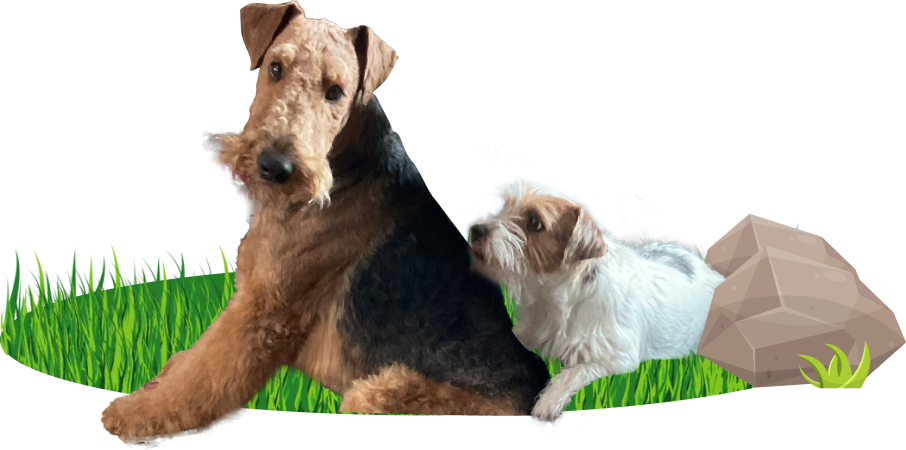
Russell Terrier Puppies
Russell Terrier Pet Puppies Not Currently Available. For info on planned breedings, contact: at dadriancavers@xplornet.ca or shawndee@mymts.net


The Russell Terrier is similar to the more widely known Parson Russell Terrier, aka the Jack Russell Terrier. And while they may be shorter in length than the average baguette, the breed’s energy stretches for days.
After all, these sprightly dogs were designed for fox hunting, a task where stamina, smarts, and even their compact size are key to their success. So regardless of whether they make their home on a farm or in a flat, Russell Terriers need a job—which can include anything from hunting and hiking to a game of fetch in the backyard.
Russell Terriers are compact, strong, and built for speed, designed to be quick and agile hunters. Their coats are mostly white with patches of black, tan, or brown, and vary in texture—ranging from smooth to rough.
Almond-shaped, dark, and alert.
Black, fully pigmented.
Typically short to medium, with textures ranging from smooth to rough.
Usually high-set, straight, or slightly curved, and often docked (though this is a debated practice).
Small, triangular, and fold downward. The ear points align with the dog’s eyes.
Primarily white with tan, brown, and/or black markings.
Russell Terriers are highly energetic and intelligent, bred for working and making quick decisions while hunting. Their lively and intense personalities make them loyal companions, always on the move. They are friendly but need early socialization to help them get along with other pets, as their hunting instincts can make them wary of smaller animals like cats.
Russells can be noisy, often barking, which can be a challenge at home. Early training helps control this behavior. Despite their high energy, they are generally friendly and can be great playmates for older children.

Russell Terrier Pet Puppies Not Currently Available. For info on planned breedings, contact: at dadriancavers@xplornet.ca or shawndee@mymts.net
Russell Terriers, though small, require plenty of exercise and mental stimulation to meet their high energy needs. Their grooming is minimal, but they do require consistent care and training. Unlike larger breeds, they don’t need much space, but their active nature makes them suited for experienced owners who can dedicate time to their exercise and training.
The average lifespan of a Russell Terrier is 12–14 years. While generally healthy, they can be prone to some conditions, such as:
Originally bred by Reverend John Russell in the 19th century for fox hunting, Russell Terriers evolved from a line of dogs created for their agility and hunting ability. While the breed continued to develop in Australia, it was officially recognized by the AKC in 2012.
They are good with older children, but their high energy may overwhelm younger kids. Proper training and supervision are recommended.
They require 90–120 minutes of exercise daily, including activities like fetch, hiking, and agility, to stay healthy and happy.
Yes, they can live in apartments, but they need regular exercise and mental stimulation to stay content and avoid boredom.
They can be friendly with other dogs if properly socialized. Early introduction and training are important, especially with smaller animals.